

The Way You Hold Your Body May Be Telling You Something
Have you ever caught yourself sitting with a slump?
Maybe you’ve noticed yourself shifting to one side while chatting with a friend. Perhaps your tailbone tucks underneath you like a scared dog, or your pelvis lifts toward the sky like an excited puppy.
The way we hold ourselves in our bodies can be a beautiful reflection of how our minds, emotions, and physical selves are connected.
In the West, we often tend to dissect the body and look at ourselves through a reductionist lens. Yet, we say things every day that reveal an intuitive understanding of the mind-body connection:
“My shoulder isn’t agreeing with me.”
“My knee is bad.”
“My stupid back.”
Without realizing it, we naturally connect our experiences of the body with our thoughts and emotions. Yet when it comes to healing and prevention, we often lose that connection.
Alignment Begins on the Mat
Have you ever been in a yoga or movement class where the teacher says:
“Straighten your spine.”
“Lengthen from your tailbone to the crown of your head.”
“Stack your shoulders over your hips.”
Most likely, your teacher is offering these cues to help you move safely and efficiently through a posture.
But perhaps there is another message hidden within those words:
Feel good about yourself.
Express joy from your heart.
Stand tall.
Be seen in this world.
Louise Hay wrote, “In the infinity of life where I am, all is perfect, whole, and complete.” Imagine if we could move through our lives in a way that embodied that statement. What if the way we stood, walked, sat, breathed, and moved reflected an inner sense of wholeness?
Perhaps we might experience fewer injuries, more joy, stronger social connections, and more energy for our daily lives.
There are many fascinating rabbit holes we could explore around the connection between physical alignment, our inner nature, and the way we experience our lives. For today, let’s begin with something tangible: the physical alignment of the spine.
Understanding the Alignment of the Spine
The spine is not meant to be perfectly straight from the side. It has natural curves that create strength, stability, mobility, and resilience. When viewed from the front or back, a healthy spine generally appears relatively straight. From the side, however, we see four primary curves:
- Sacral curve — a natural kyphotic curve at the base of the spine
- Lumbar spine — five vertebrae with a natural lordotic curve
- Thoracic spine — twelve vertebrae with a natural kyphotic curve
- Cervical spine — seven vertebrae with a natural lordotic curve
These alternating curves help create what we might think of as a strong and adaptable “stacking” system.
Rather than being a rigid structure, the spine is designed to move. Its curves help distribute forces throughout the body and contribute to our ability to walk, run, bend, twist, and respond to the world around us. When we find balanced alignment, we can often access greater stability, strength, and freedom of movement. We also reduce unnecessary strain on muscles and other soft tissues.
Alignment doesn’t mean forcing the body into a perfect position.
It means creating enough awareness to allow the body to organize itself with greater efficiency and ease.
Four of My Favorite Movements for Spinal Mobility
One of the best ways to develop this awareness is through simple, mindful movement.
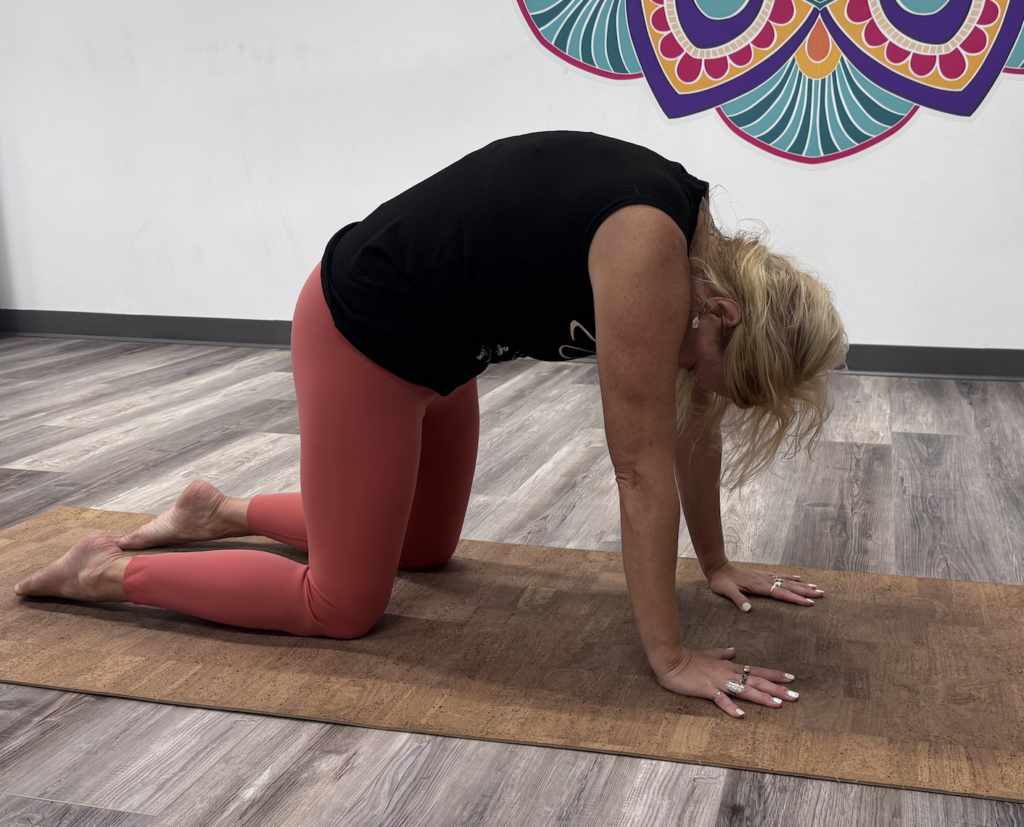
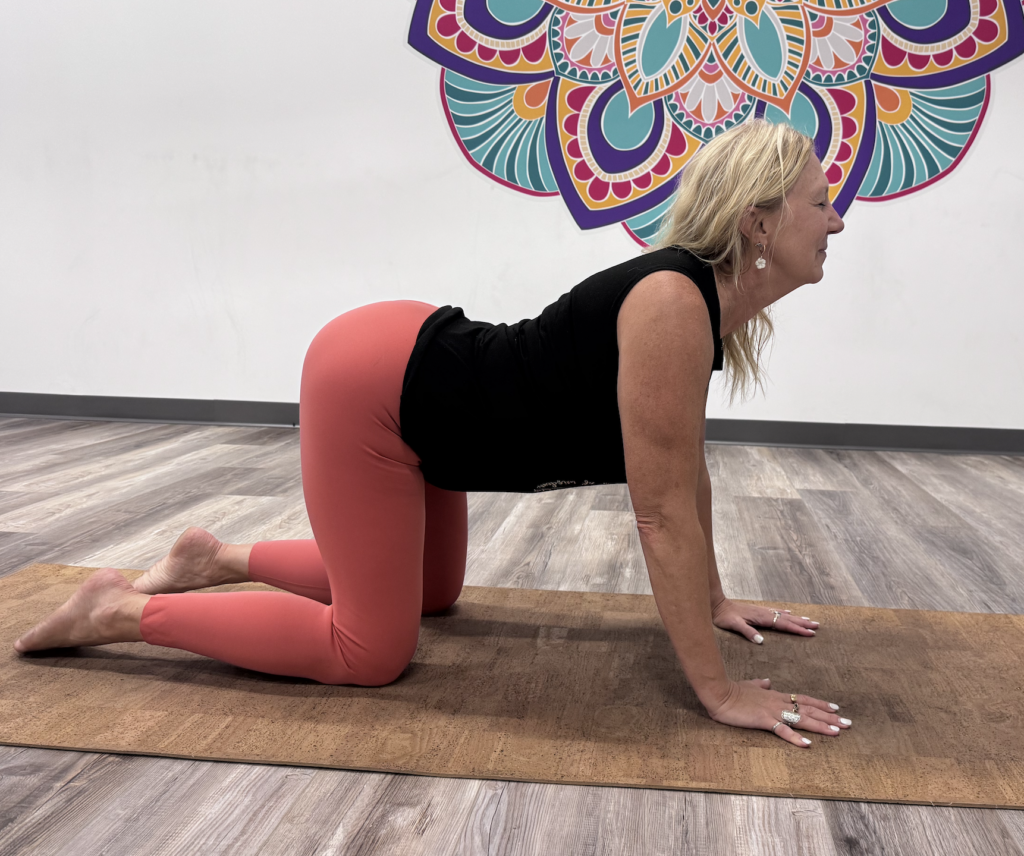
Cat/Cow Pose
Cat/Cow gently moves the spine through flexion and extension while bringing awareness to the relationship between the pelvis, spine, shoulders, and breath.
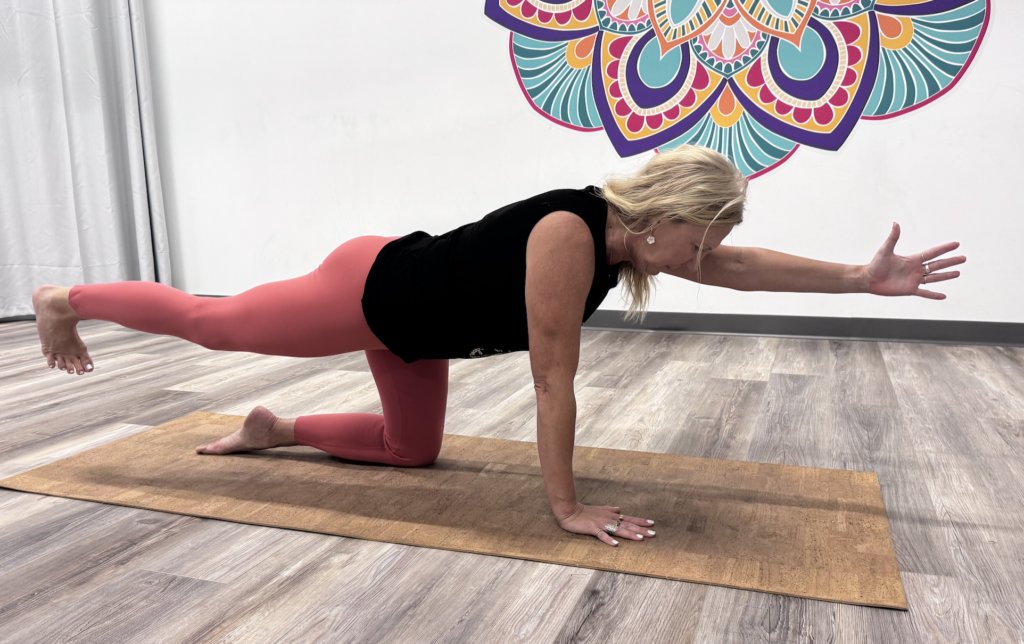
Spinal Balance Pose
Spinal Balance challenges stability while encouraging us to maintain awareness of the spine and the body’s relationship to gravity.
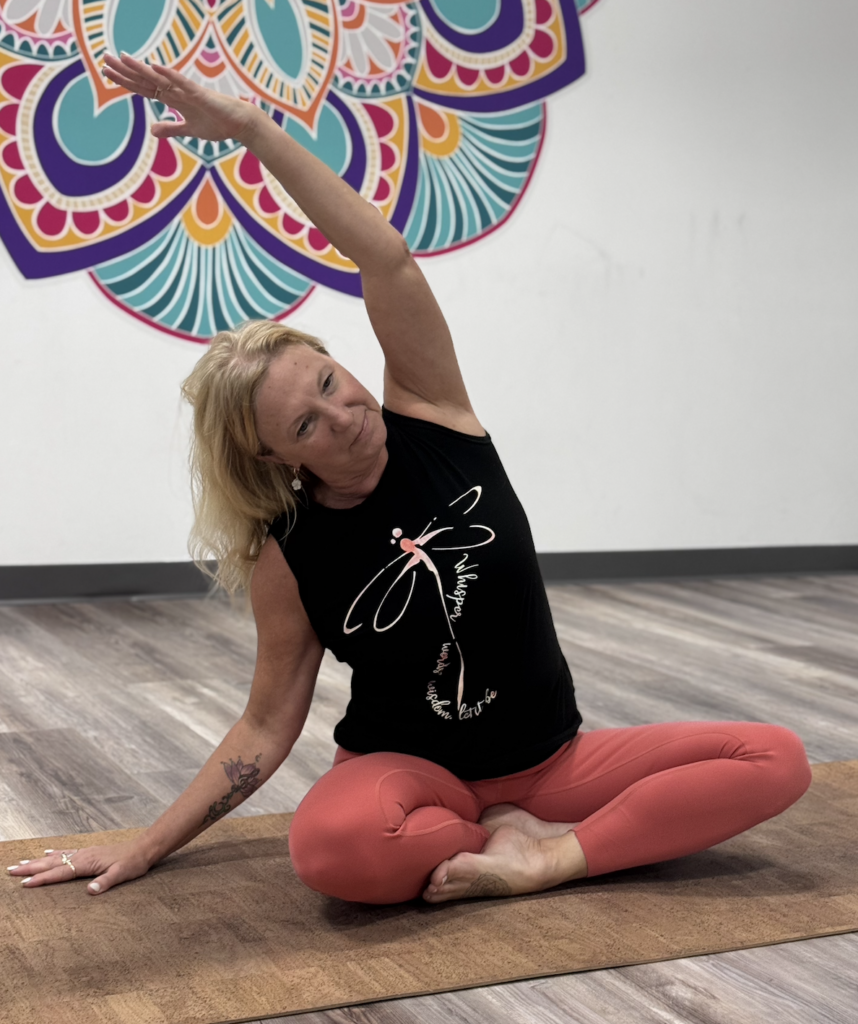
Side Bends: Side bending brings movement into the lateral body and helps us notice differences between the right and left sides of the body.
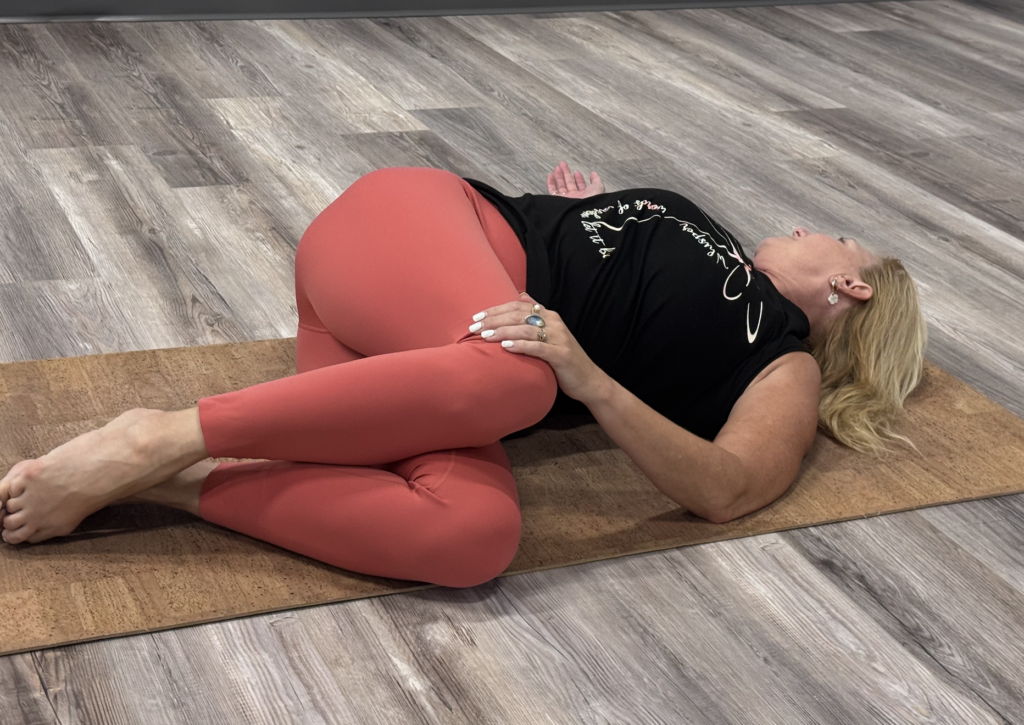
Supine Twist: A gentle supine twist offers an opportunity to explore rotation while supported by the floor. It can also be a wonderful practice in slowing down and noticing what the body is communicating.
Alignment On and Off the Mat
Yoga gives us a laboratory for exploring alignment.
On the mat, we have the opportunity to slow down, notice our habits, and experiment with new ways of moving. Over time, that awareness can begin to follow us off the mat.
How do you sit at your desk?
Do you always cross the same leg?
Do you lean into one hip when standing?
Do you carry your bag on the same shoulder?
Do you notice yourself collapsing through your chest when you’re tired or stressed? These seemingly small patterns accumulate throughout our days.
By practicing awareness of our alignment — both on and off the mat — we can begin to recognize muscular imbalances, movement habits, and patterns that may contribute to discomfort or injury. But physical alignment is only the beginning.
Our bodies don’t exist separately from our thoughts, emotions, energy, and experiences. The way we inhabit our bodies can influence how we feel, and the way we feel can influence how we hold ourselves.
The body speaks. The question is whether we are willing to listen.
In the next blog, we’ll explore the emotional and energetic dimensions of alignment and how the way we hold ourselves physically may reflect something deeper within.
“The mind and body are not separate. What affects one, affects the other.”
— Joseph Pilates
“It is through the alignment of the body that I discovered the alignment of my mind, self, and intelligence.”
— B.K.S. Iyengar
“Our body is precious. It is our vehicle for awakening. Treat it with care.”
— Buddha
“From him the whole body, joined and held together by every supporting ligament, grows and builds itself up in love, as each part does its work.”
— Ephesians 4:16